
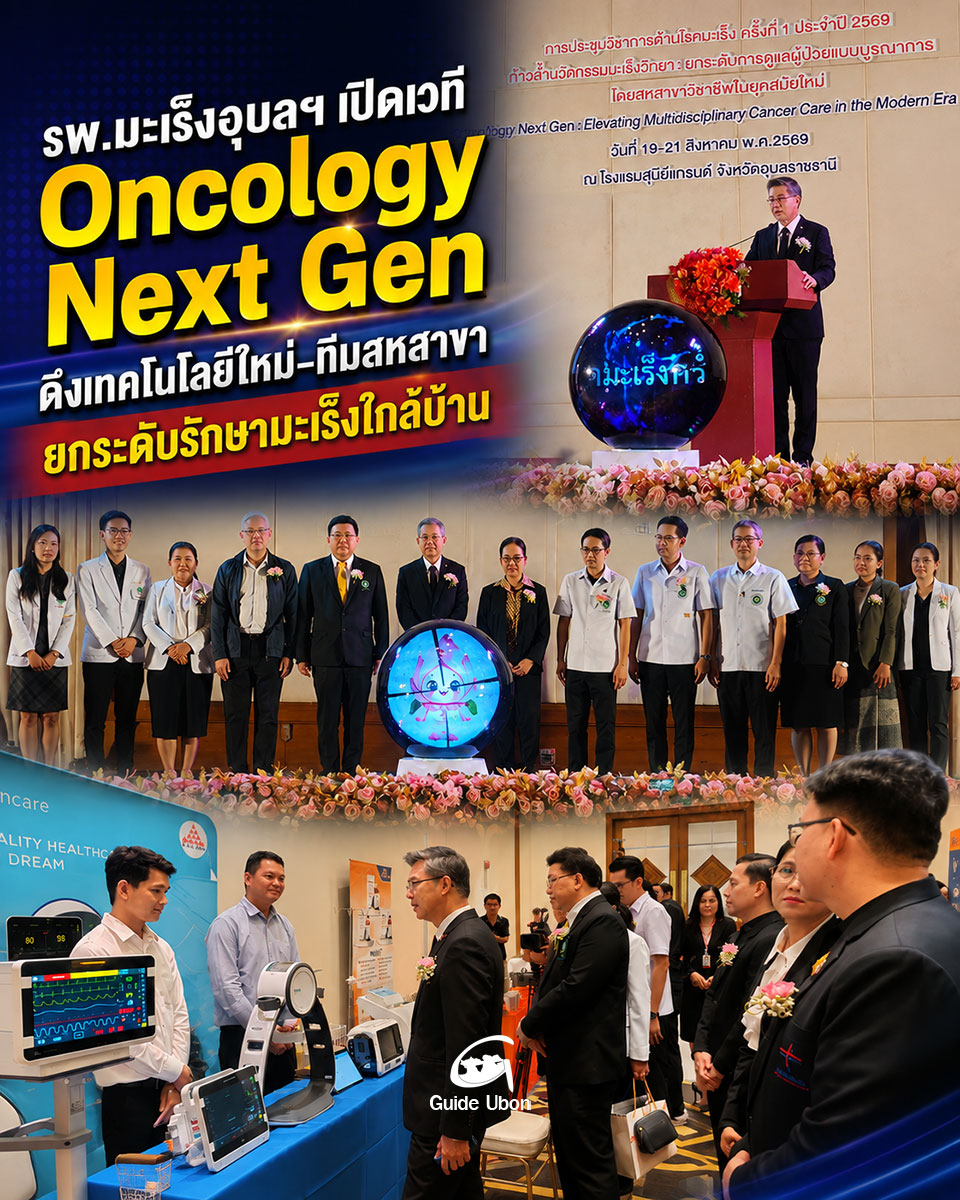
Ubon Ratchathani Cancer Hospital opened the 1st Annual Cancer Symposium 2026, bringing together about 300 medical and public health personnel, exchanging knowledge and innovation, from Precision Oncology, Genomic Medicine to CAR-T Cell, aiming to build a multidisciplinary patient care network, reduce referrals, reduce waiting time, and increase opportunities for the public to access standard treatment close to home.
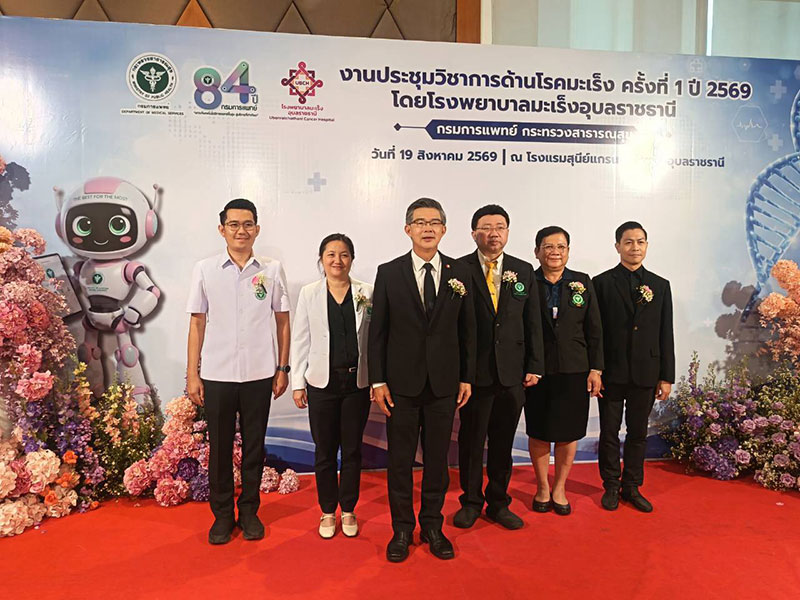
On 19 August 2026 at Sunee Grand Hotel, Ubon Ratchathani Province, Ubon Ratchathani Cancer Hospital, Department of Medicine held the 1st Cancer Symposium for the fiscal year 2026 under the concept of“Oncology Next Gen: Elevating Multidisciplinary Cancer Care in the Modern Era”The meeting was held from August 19-21, 2026, with approximately 300 doctors, nurses, medical and public health personnel, academics, and interested parties from public and private organizations across the country.
This conference provides a platform to disseminate and exchange knowledge, academic progress, research and innovation in cancer, as well as develop the capacity of people to apply modern technologies, ranging from prevention, diagnosis, treatment, rehabilitation and care of patients, as well as building a network of academic collaborations both domestically and internationally.
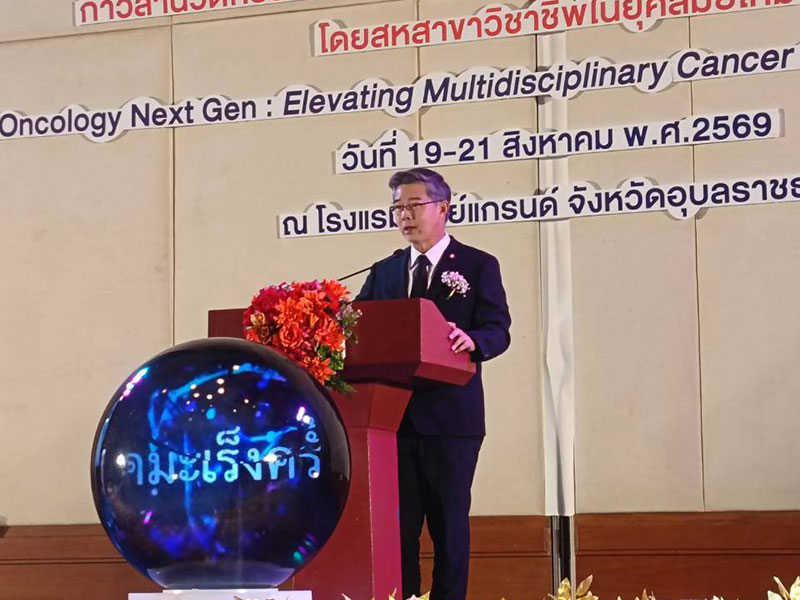
Dr. Taweesil Visanuyothin, Advisor to the Minister of Public Health and Advisor to the Director-General of the Department of Medical ServicesThat said, cancer is also a major public health problem. While oncology knowledge and technology advances rapidly in precision medicine, medicine, genetics, cell and gene therapy, artificial intelligence, and the use of databases to plan services, these advances are maximized when they can be used appropriately, equally, and connect patients with care, from prevention and screening to palliative recovery and care.
“This conference is important as a platform to connect the knowledge, technology and cooperation of all branches of people involved in cancer care.”
Dr. Taweesil stated that cancer care is now more complex, from the prevention and screening of genetic-level diagnoses, to patient-specific treatments, to rehabilitation and palliative care. Therefore, it cannot be performed by any profession alone, but it requires a multidisciplinary team and a network of health services at all levels. The important goal is to make new knowledge not only stop in the conference room, but can actually be used to improve the quality of services and patient outcomes.
for academic content throughout the 3-day conference covering cancer policy and strategy, precision medicine orPrecision Oncology, Genomic Medicine, using cancer data to advance field-level health work, bone marrow transplantation, and therapy.CAR-T CellDevelopment of specialized nursing, modern surgery and radiotherapy, nutritional therapy, palliative care, communication and counseling, including cancer wound care, and academic and innovative presentations.
Dr. Thaweesil said that the important point is not to adopt technology just because it is new, but to choose it to suit the patient, to have evidence to support it, to be safe, to be cost-effective, and to be fairly accessible to the public. If possible, these technologies will help to make more accurate diagnoses, to choose the right treatment, to reduce complications, and to improve the quality of life of patients.
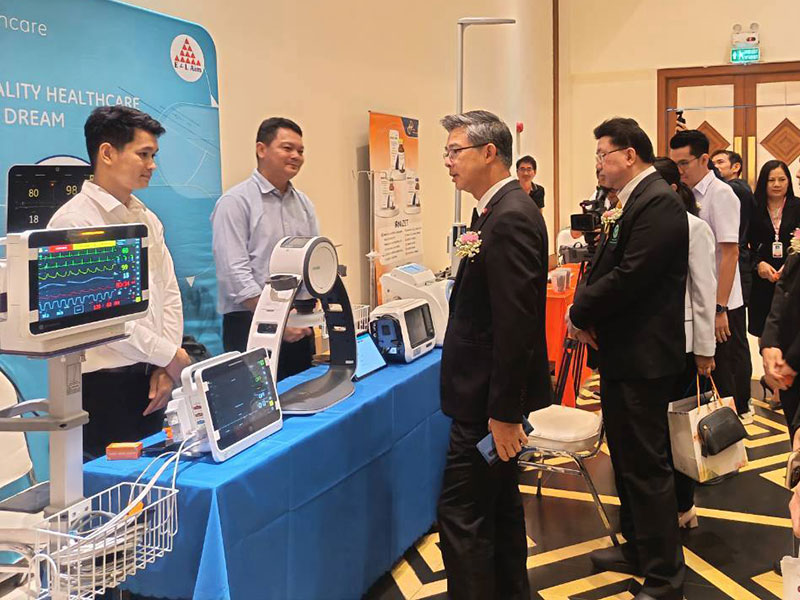
Key goal “Stay better, stay better, stay closer to home”
As for the consequences for the public, especially cancer patients in the Northeast, Dr. Taweesil emphasized that
“The benefits that people deserve are more quality services, more continuity, and closer to home.”
When cancer hospitals, hospices, general hospital centers, and local service networks are able to exchange knowledge and develop collaborative approaches, it helps to optimize patient referrals, reduce redundancy, shorten waiting times, and ensure continuity of care from the hospital to the community and at home.
Especially cancer patients, it is important to receive timely and accurate diagnosis and treatment, so the outcome of the meeting is not just to increase personnel knowledge, but to lead to public access to standardized services, reduce treatment inequalities, and improve quality of life.
Ubon Ratchathani Cancer Hospital has also played a role in developing specialized cancer services and linking health service networks in the Northeast. The conference is therefore set to be another step in developing into a hub for cancer knowledge, research and innovation, while building collaboration between local and international agencies.
Repeat, the meeting is over, but the work must not be
Dr. Thaweesilp said after the meeting that
“The meeting should not end with the closing ceremony, but it must be the beginning of putting knowledge into practice and building a strong network.”
The following approach is to continuously improve workforce capacity, promote empirically evidenced-based practices, develop collaborative information and research systems, and link referral systems and inter-service unit expert consultations to provide patients with a more similar standard of care.
The Department of Medicine supports academia, technology, service systems, and interagency collaboration with the goal of enabling Ubon Ratchathani Cancer Hospital and its network to effectively care for complex patients and provide people with access to quality, safe, and nearest-to-home cancer treatment.
Dr. Taweesil lastly stated that the knowledge, innovation and cooperation arising from this stage will be an important part in increasing the chances of increasing the quality of life and increasing the hope of cancer patients and their families, while emphasizing the public awareness of prevention, reducing risk factors, screening as appropriate and receiving timely services.