
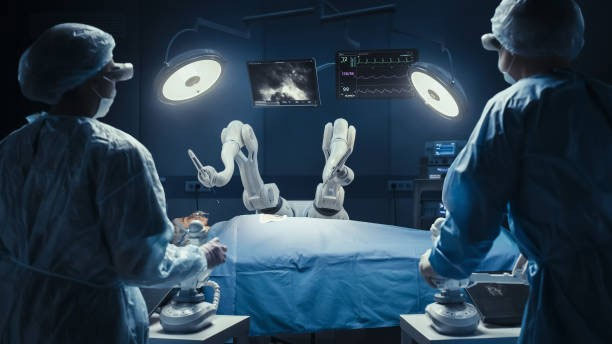
Medical robot, innovative, precise and safe treatment
In an era of rapid advancement in technology, the medical community has adopted innovations to develop more effective treatments. One of the outstanding technologies is "Medical Robots“It is revolutionizing medicine with superior precision, safety, and efficiency. This article provides an overview of medical robotics, its benefits, and its impact on public health.
Types of robots used in medicine
There are many different types of medical robots, each designed to meet specific needs in the medical field.
• Surgical robots: used in high precision surgeries such as cerebral, cardiac,
• Rehabilitation Robot: Assists in walking training and restoring mobility for paralyzed patients.
• Patient Care Robot: Used in daily patient care such as dispensing medication, measuring vital signs.
• Pharmacy Robot: Helps to precisely arrange and dispense medication.
Benefits of medical robots
The introduction of robots in medicine has many benefits for patients, healthcare professionals, and the public health system as a whole.
• High accuracy: minimizes treatment mistakes, especially in complex surgeries.
• Safety: reduce the risk of infection and complications
• Efficacy: Continuously work without fatigue, increasing the number of patients treated.
• Accessibility: Allows complex treatments to be performed in remote areas via remote control systems.
Challenges and limitations
While medical robotics has many advantages, its practicality still faces a number of challenges.
• High cost: Investing in medical robots is costly.
• Personnel training: Doctors and nurses must be trained to operate the robot effectively.
• Technical limitations: some situations may require more human judgment than robots.
• Ethical issues: Therapeutic use of robots may raise privacy and medical decision-making concerns.
The future of medical robotics
The continuous development of technology opens the opportunity for medical robots to have higher potential in the future by embracing a variety of technologies to be adapted together, such as:
• AI Development: Combining artificial intelligence will give robots greater diagnostic and decision-making capabilities.
• Nanotechnology: development of micro-nanobots for cellular therapy
• Combination with other technologies: e.g. in combination with AR and VR technologies to enhance diagnosis and treatment.
Medical robots are changing the face of public health by exceeding human capabilities in many ways. Despite the challenges of adoption, the benefits are enormous. The continuous improvement of this technology will enhance the quality of medical care, increase the chances of patient survival, and revolutionize the way healthcare professionals work. However, it is important to balance the use of technology and human preservation in health care to maximize the benefits to patients and society as a whole.